


EU research project
Reno Tides – LIFE
Step-by-step energy renovation for carbon neutrality by 2050
Background & Motivation
The renovation rate in the EU is well below the required level, even though the building and construction sector accounts for over 40% of CO₂ emissions and energy prices are rising.
The challenge: bringing the building stock up to a high standard of efficiency—affordable, sustainable, and climate-neutral by 2050.
Reno Tides aims to make this transformation path economically and technically feasible with industrialized and phased renovation waves.
Reno Tides – an EU-funded LIFE project (2024–2027)
“Step-by-step energy renovation with a focus on high levels of prefabrication”
Project objectives & methodology
Development of "renovation waves":
Prefabricated, insulated facade elements
Prefabricated, insulated, and solar-assisted roof modules
Energy infrastructure: heating, ventilation, renewable energy systems
Lean management and BIM process chains to accelerate workflows
Innovative financing models and bundling of multiple projects for economies of scale
Digital tools and processes to support decision-making for housing companies
Supporting social housing companies in setting ambitious standards
Our role
Supporting construction professionals and housing companies in creating more affordable building diagnostics
Implementation of digital lean delivery kits and BIM process chains
Training courses and workshops for housing companies on the use of digital tools
Development of the roof extension process chain with a focus on feasibility
With this contribution, Haorga ensures that the project methodology remains practical and enables rapid market penetration.
Schedule & Budget
Duration: October 2024 – September 2027
Total budget: €2.93 million (EU funding: €2.78 million)
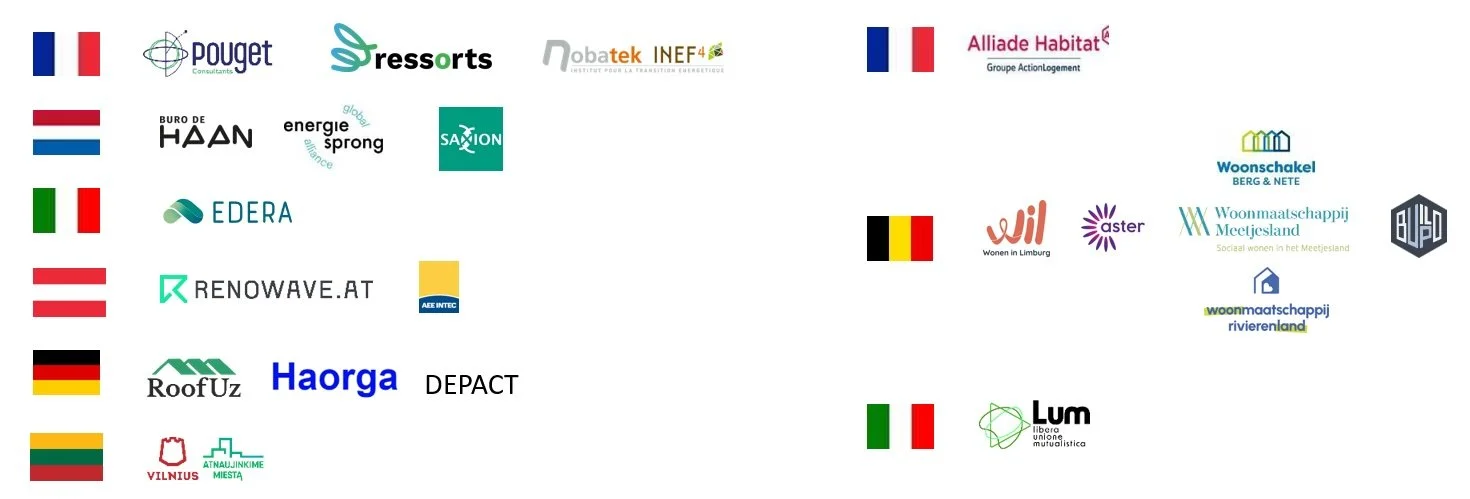
Consortium & Partners
Quick, step-by-step renovation options with minimal disruption to your home
Higher energy efficiency and CO₂ reduction across the entire building stock
Increased revenue through optimized rental structures
Replicable methodology for scaling up across Europe by 2050
Planned knowledge transfer: Digital tools and process chains, profitability calculations, contracts, workshops, marketplace, purchasing pooling